1

Building resilient clinical trials

Reading now

1
2

The future of clinical trials

Read next

2

The trials we run today, and what would make them resilient.

By David Tsai · Adapted from my keynote, February 2026

01Overview

I’ve spent the last decade and a half in clinical research and drug development, with the first five years spent at the clinical site. Enrolling patients for Phase I–IV studies.

More about me

The way we run them has not changed much since.

The question

What makes a clinical trial resilient?

Humans are resilient. It is the most basic thing about us.

Every medicine in your cabinet exists because people you have never met agreed to take part in a clinical trial.

In February of this year, I stood in front of a room of people who run clinical trials for a living and asked them three questions, one at a time, by a show of hands.

02The trials we deserve

The distance between what we build and what we’d accept for ourselves

“How many of you have run a clinical trial?”

Nearly every hand in the room went up.

“How many of you have been in a clinical trial?”

Most of those hands came down.

“How many of you would participate in a trial you’ve run?”

A few were left.

Part of that distance comes from the pace of the world around trials, and it is speeding up.

03Exponential advancements

Decades to adapt. Now years.

Steam took a century to become infrastructure.

Electricity took eighty years.

Computers took about forty.

The internet took about twenty.

AI has had five.

Trials have to keep up with that pace using the people, sites and systems they run on today.

Steam engine1700s–1800s
100 yrs
Electricity1800s–1900s
80 yrs
Computers1950s–1990s
40 yrs
Internet1990s–2010s
20 yrs
AI2020–
5 yrs
020406080100
Years to become infrastructure

Source: my February 2026 keynote

Instagram took two and a half years to reach 100 million users. ChatGPT took about two months.

2months
Instagram
30 months
ChatGPT
2 months

Months to reach 100 million users

Source: UBS estimate reported by Reuters, February 2023

04Who is building

Who is building the future of clinical trials?

There are two familiar answers, and neither is enough on its own.

Technology-led. Explosive launch, rapid adoption, and then the technology does not fit how trials actually run. Adoption craters and trust goes with it.

Expert-led. Built by people who understand trials, and constrained to moving one step at a time while the need grows exponentially.

AI × human. AI removes what drains us. Humans amplify what matters. Human wisdom at tech-enabled velocity.

TIME ADOPTION TECHNOLOGY-LED EXPERT-LED AI × HUMAN

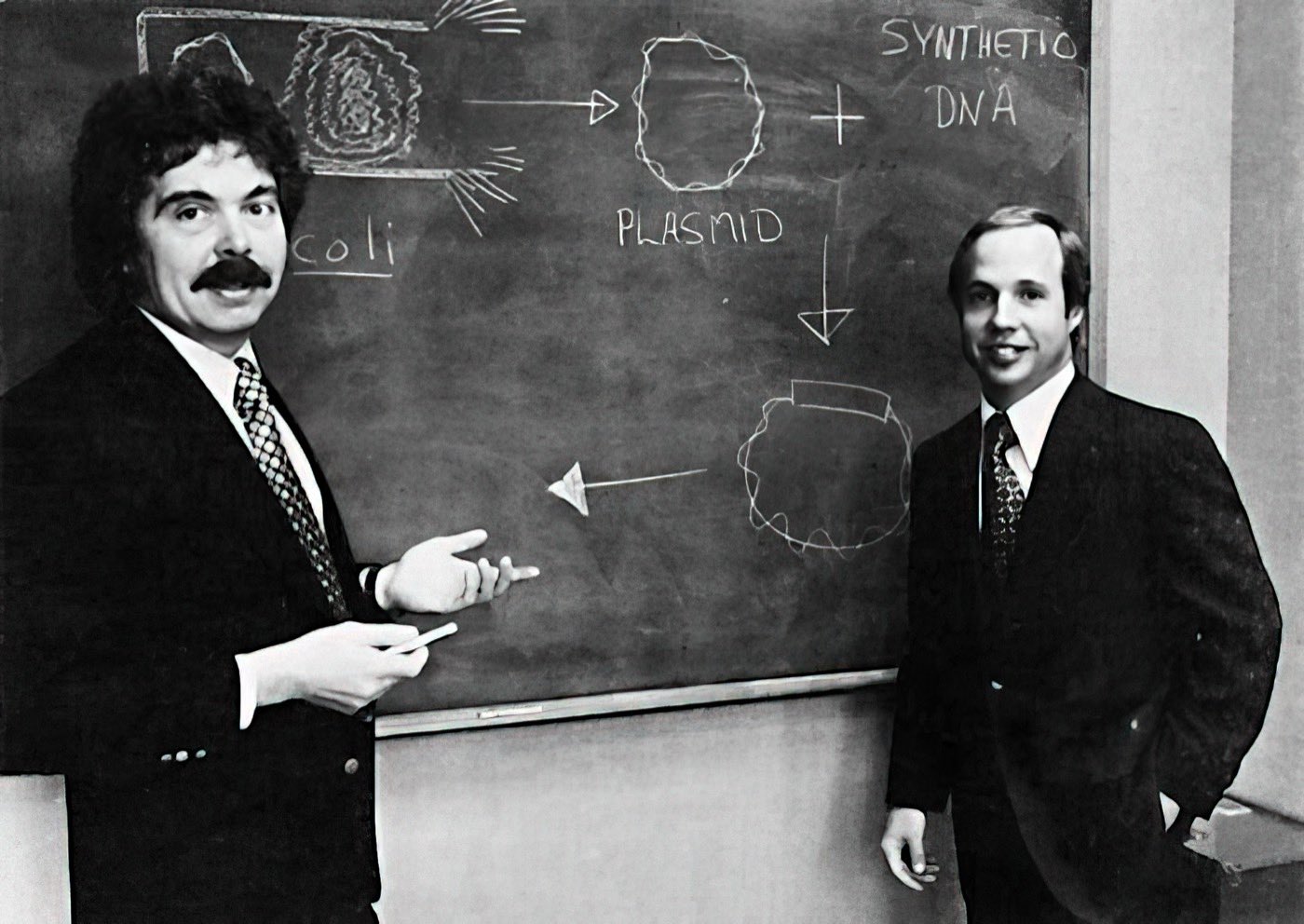
In 1976, Genentech’s founders set out to make human insulin in bacteria, something no one had done, rather than improve the animal insulin people had relied on since 1922. That is the kind of question I want us asking about trials.

Herbert Boyer and Robert Swanson at a chalkboard: E. coli, an arrow to a plasmid, plus synthetic DNA, and the plasmid carrying the new gene

In 1976,

Genentech’s founders set out to make human insulin in bacteria. No one had ever done it.

Look where we are today.

That is the kind of question I want us asking about trials.

Herb Boyer and Bob Swanson, 1976. Courtesy of Genentech

05Slow communication

The answer is there. Reaching it is too slow.

Trials lose time to slow communication. When one person in a trial needs an answer from another, the question travels from inbox to inbox.

The sponsor is the company that pays for and runs a study, the site is the hospital or clinic where patients are seen, and the CRO is the contract research organization a sponsor hires to manage the work.

Friday, 6 PM. A coordinator at a clinical site has a patient on the phone, and a question:

A patient just called with a Grade 2 adverse event. Does this need reporting within 24 hours, or can it wait until Monday?

The coordinator emails the CRO. Two hours later, the CRO passes it to the sponsor.

The sponsor reads it Saturday morning and asks its safety team.

Safety replies Monday at 8 AM. The answer reaches the coordinator at 9 AM: 63 hours, for one question.

Every piece of that answer already exists. Give the coordinator the sponsor’s protocol, the study’s own data and an FAQ to ask directly, and it comes back while the patient is on the line.

November 2026Fri to Mon
6 AM12 PM6 PM
Fri 6Site asks CROSite → CROCRO asks sponsorCRO → sponsor
Sat 7Sponsor asks safetySponsor → safety
Sun 8
Mon 9Safety repliesSafety → sponsorSponsor replies to siteSponsor → site
Patient callsCoordinator asksAnswer, with sourcesLogged, patient told
ReplyReply AllForward
SC
Site Coordinator!Grade 2 AE, patient on the phone. Report or wait?To CRO Monitor
CM
CRO MonitorFW: Grade 2 AE, patient on the phone. Report or wait?To Sponsor Study Team Cc Site Coordinator
ST
Sponsor Study TeamFW: Grade 2 AE, patient on the phone. Report or wait?To Safety Team Cc CRO Monitor
SA
Safety TeamRE: FW: Grade 2 AE, patient on the phone. Report or wait?To Sponsor Study Team
ST
Sponsor Study TeamFW: RE: FW: Grade 2 AE, patient on the phone. Report or wait?To Site Coordinator Cc CRO Monitor

From: Site Coordinator
Sent: Friday, November 6, 2026 6:04 PM
To: CRO Monitor
Subject: Grade 2 AE, patient on the phone. Report or wait?

Patient on the phone, Grade 2 event, not hospitalized. 24-hour report, or can it wait until Monday?

Site Coordinator
Clinical Research Coordinator | Site 014 | Tel 555-0114

This email and any attachments are confidential and intended solely for the addressee. If you have received it in error, please notify the sender and delete it.

From: CRO Monitor
Sent: Friday, November 6, 2026 8:11 PM
To: Sponsor Study Team
Cc: Site Coordinator
Subject: FW: Grade 2 AE, patient on the phone. Report or wait?

Passing this to the sponsor.

CRO Monitor
Clinical Research Associate | Study ABC-301 | Tel 555-0301

This email and any attachments are confidential and intended solely for the addressee. If you have received it in error, please notify the sender and delete it.

From: Sponsor Study Team
Sent: Saturday, November 7, 2026 10:23 AM
To: Safety Team
Cc: CRO Monitor
Subject: FW: Grade 2 AE, patient on the phone. Report or wait?

Asking our safety team.

Sponsor Study Team
Clinical Trial Manager | Study ABC-301 | Tel 555-0209

This email and any attachments are confidential and intended solely for the addressee. If you have received it in error, please notify the sender and delete it.

From: Safety Team
Sent: Monday, November 9, 2026 8:02 AM
To: Sponsor Study Team
Subject: RE: FW: Grade 2 AE, patient on the phone. Report or wait?

Not serious, so no 24-hour report. Log it.

Safety Team
Drug Safety | 24-hour line 555-0911

This email and any attachments are confidential and intended solely for the addressee. If you have received it in error, please notify the sender and delete it.

From: Sponsor Study Team
Sent: Monday, November 9, 2026 9:04 AM
To: Site Coordinator
Cc: CRO Monitor
Subject: FW: RE: FW: Grade 2 AE, patient on the phone. Report or wait?

Log it. No report needed.

Sponsor Study Team
Clinical Trial Manager | Study ABC-301 | Tel 555-0209

This email and any attachments are confidential and intended solely for the addressee. If you have received it in error, please notify the sender and delete it.

All folders are up to date.Connected
Study portal · ask a question

ProtocolOnly serious events go in 24 hours.
Study dataSimilar events here: none expedited.
FAQGrade 2, not serious: log it.
Answer ·

Not serious, so no 24-hour report. Log it.

Sources: protocol, study data, FAQ
The coordinator logs it for the investigator to sign and tells the patient, on the same call.

Sixty-three hours become none.

Sixty-three hours become none.

When a case truly is new, it still goes to the safety team, with everything they need to answer it that evening.

That weekend is ordinary. Here is what a day looks like for the people who run a trial at a sponsor.

Where the time goes
One Tuesday, one study team0communication
Clinical trial managerCTMClinical research associateCRAClinical trial assistantCTA
8 AM9101112 PM123456 PM
Inbox: overnight site questionsSite inbox
Enrollment huddleEnrollment
Study team meetingStudy team
CRO weeklyCRO weekly
Vendor call: IRTIRT vendor
Medical monitor touchpointMed monitor
Site budget follow-upSite budget
Protocol deviation reviewDeviations
Timeline and risk reviewTimeline, risk
Vendor call: central labLab vendor
Contract amendment follow-upContracts
Data review meetingData review
Safety reporting check-inSafety check
Recruitment plan updateRecruitment
Status report for leadershipStatus report
Visit confirmation emailsVisit emails
Remote monitoring visit: site 112Remote visit, 112
Site check-in: site 104Site 104
Monitoring visit reportVisit report
Query follow-up with siteQueries
Vendor call: EDCEDC vendor
Site check-in: site 118Site 118
Action items to coordinatorsAction items
Follow-up letter: site 112Follow-up letter
Deviation log updateDeviation log
Consent form version checkConsent check
Site staff training callSite training
CRO monitoring team syncCRO sync
Drug accountability questionsDrug accountability
Schedule next week’s visitsNext visits
TMF QCTMF QC
Study team meeting: minutesTeam minutes
Status tracker updateTracker
IRB submission packageIRB package
Vendor invoice reconciliationInvoices
Minutes: CRO weeklyCRO minutes
eTMF filingeTMF filing
Site activation checklistActivation
Regulatory binder checkReg binder
Courier: lab kits to sitesLab kits
Training records updateTraining log
Action item trackerAction items
Agendas for tomorrowAgendas
Safety letter distributionSafety letters
Document requests to sitesDoc requests
eTMF reconciliationeTMF recon
Project managementPM
Data & documentationData
Vendor & site managementVendor
Monitoring & site supportMonitor
Regulatory & complianceReg
Data & documentationData
Vendor & site managementVendor
Monitoring & site supportMonitor
Regulatory & complianceReg
Project managementPM
Data & documentationData
Vendor & site managementVendor
Regulatory & complianceReg
Project managementPM25%80%
Data & documentationData20%60%
Vendor & site managementVendor20%75%
Monitoring & site supportMonitor20%85%
Regulatory & complianceReg15%70%
  • Project management
  • Data & documentation
  • Vendor & site management
  • Monitoring & site support
  • Regulatory & compliance
9101112123456
Mon
Project managementPM3 h
Data & documentationData2 h
Vendor & site managementVendor2 h
Monitoring & site supportMonitor2 h
Tue
Monitoring & site supportMonitor3 h
Project managementPM2.25 h
Regulatory & complianceReg1.75 h
Data & documentationData2 h
Wed
Vendor & site managementVendor2.5 h
Data & documentationData2.5 h
Project managementPM2 h
Monitoring & site supportMonitor2 h
Thu
Regulatory & complianceReg2.5 h
Vendor & site managementVendor2.5 h
Project managementPM2 h
Data & documentationData1 h
Monitoring & site supportMonitor1 h
Fri
Project managementPM2 h
Regulatory & complianceReg2.5 h
Vendor & site managementVendor2 h
Data & documentationData1.5 h
Monitoring & site supportMonitor1 h
0communicationof the working week in clinical operations: emails, calls, meetings and follow-ups
  • Project management 25% of the week80% communication
  • Data & documentation 20% of the week60% communication
  • Vendor & site management 20% of the week75% communication
  • Monitoring & site support 20% of the week85% communication
  • Regulatory & compliance 15% of the week70% communication
  • Darker share: communication

Source: my February 2026 keynote

One Tuesday for a study team: the clinical trial manager, a clinical research associate and a clinical trial assistant. Every half hour is booked, and most blocks are a call, a meeting or a follow-up.

Sort those blocks by the kind of work they are, and five categories cover all of it.

Put the three calendars together. Project management takes about a quarter of the time, and the other four split the rest.

Over a whole week, project management takes about a quarter of the time, and the other four split the rest.

Give each category a column as wide as its share of the time. Project management takes about a quarter, and the other four split the rest.

Then ask how much of each is communication: emails, calls, meetings and follow-ups. That is the dark share of every band, between 60 and 85 percent.

Then ask how much of each block is communication: emails, calls, meetings and follow-ups. That is the dark share, between 60 and 85 percent.

Then fill each column to its communication share: emails, calls, meetings and follow-ups. That is between 60 and 85 percent.

Across all of it, 75% is communication.

06What makes a trial resilient

The clinical trial of tomorrow must be

Seamless. Meet them where they are.

Today, the patient travels to the site.

Adaptive and decentralized designs, so the trial travels to the patient instead of the patient traveling to the trial.

Synergistic. Sponsors, sites and CROs as partners.

Synchronized. One set of facts, available to everyone.

Today, work passes down a chain, one organization at a time.

The same people, in the same room, with the same incentive — rather than three organizations managing each other.

Today, each organization keeps its own copy of the facts.

Day 26 of a 28-day screening window. One question is left: does her adjuvant chemo count as a prior line of therapy? The coordinator asks the CRA, the CRA asks the CRO’s medical monitor, who asks the sponsor. The answer arrives on day 31, and she rescreens.

That same Saturday, another patient is admitted overnight. The serious event form goes in within 24 hours. The causality question comes back Monday, the investigator answers Tuesday, the sponsor’s physician reads the case Wednesday. Both answers were already in someone’s files.

Asynchronously synchronized: sponsor, CRO and site working from the same information at the same moment, without waiting on each other.

In the AI age this matters more. A model fed two records that disagree will answer confidently from either one. It needs one source of truth: readable data, good metadata, sources you can trace.

The data already exists. Why is it not accessible now?

Investigator Site File, Site 014ISF viewer
  • Tab 1  Delegation log
  • Tab 2  Protocol_v3.0_signature_page.pdf
  • Tab 5  IRB_approval_amendment3.pdf
  • Tab 6  ICF_v3_stamped.pdf
  • Tab 9  Training_log_Oct.xlsx
RECEIVED, not yet approved
  • Protocolv3.0
  • Ethics approvalpending
  • Retrained2 of 6
  • Consent formv3 in use
Site_status_tracker_v12_FINAL.xlsxSpreadsheet
ABCDEFGH
12013Dr RuizActivev4.0approvedcompletev4 in useOct 14
13
14014Dr OkaforActivev4.0submittednot updatedv4 sentOct 30
15015Dr ChenActivev4.0approvedcompletev4 in useOct 21
16016Dr PatelPendingv3.0pendingv3 in use
Site statusSheet2Sheet2 (copy)
Trial Master File, Study ABC-301eTMF
  • 01 Trial Management
  • 02 Central Trial Documents
    • Protocol_v4.0_final.pdf
    • ICF_v4_master.pdf
  • 03 Regulatory
  • 04 IRB or IEC and Other Approvals
    • Submission_amd3.pdf
  • 05 Site Management
    • Training_plan_v2.pdf
  • 06 IP and Trial Supplies

Protocol_v4.0_final.pdf

StatusFinal

Version4.0

Ethics approvalapproved

Site trainingcomplete

Consent formv4 in use

One source of truth

  • Protocol v4.0 issued. This site is on v3.0.Protocol_v4.0_final.pdf
  • Ethics approval: pending at this site.IRB_submission_amendment3.pdf
  • Site team retrained: 2 of 6.Training_log_Oct.xlsx
  • New consent form: not yet in use.ICF_v4_master.pdf
SponsorCROSite
Seamless means

Meeting patients where they are, reducing patient burden instead of increasing it at a time when they already have too much going on.

Synergistic means

Sponsors, sites and CROs as partners: the same people, in the same room, with the same incentive, rather than three organizations managing each other.

Synchronized means

One set of facts, available to everyone: sponsor, CRO and site working from the same information at the same moment, without waiting on each other.

SeamlessMeet them where they are.
SynergisticSponsors, sites and CROs as partners.
SynchronizedOne set of facts, available to everyone.

Put those three together and everyone speaks the same language, with far less paper to carry it.

Together, they lead to a trial that is sustainable.

Sustainable means

Less burden.

Lower carbon.

Stronger science.

Source: my February 2026 keynote.

“Novo Nordisk’s former chief scientific officer once noted that the documentation required to request approval for two insulin products, if printed and stacked, would rise higher than the Empire State Building.”

At a tenth of a millimeter a sheet, that is roughly 3.8 million pages.

Heights to scale.

Most of it does not have to exist.

AI and new ways of working can take the printing, filing and re-keying out of a trial.

Quote: Ruxandra Teslo, The New York Times Opinion, 4 September 2026. Page counts are arithmetic at 0.1 mm a sheet. Heights: Empire State Building 381 m to the roof, 443 m to the tip; Statue of Liberty 93 m, ground to torch; giraffe 5.5 m; person 1.75 m. Silhouettes CC0.

Where the weight comes off

One completed phase III heart failure trial, measured from start to finish, came to

tonnes of carbon dioxide equivalent

The same as 582 gasoline cars driven for a year, or one car driven 10 million km.

Paper

Every page in that stack was printed, shipped, signed, filed and stored.

Electronic consent, electronic trial master files and electronic submissions take most of those steps away.

Documentation and communication came to 64 tonnes in that trial.

Travel

On-site monitoring means flights, hotel nights and rental cars for every visit.

A long drive for a short visit adds up over a study.

Remote and risk-based monitoring and visits at home, at a local clinic or by video keep those trips off the calendar and those miles off the road.

Site monitor visits were the largest line in that trial, 519 tonnes, mostly by car. Patient visits added 143.

Meetings

Investigator meetings, monitor meetings and committee meetings put people on international flights and in hotels.

Most of those can happen by video, and nobody checks into a hotel.

In-person trial meetings came to 404 tonnes in that trial.

Shipping

Study drug flies out to every site. Frozen samples fly back to a central lab.

Regional labs shorten the trip.

Study drug, samples and test kits came to 752 tonnes in that trial, mostly freight. A significant share of that supply is never used.

Old against future

Take all six of those lines down and the column looks like this.

About 60% less carbon, if every one of those lines moved.

From 582 cars on the road for a year to 582.

Hypothetical: published cuts applied to one measured trial.

Sources: Mackillop et al., “Carbon footprint of industry-sponsored late-stage clinical trials,” BMJ Open, 2023, Table 2 (the DAPA-HF trial). Hypothetical future: Kohl and Schmidt-Lucke, PLOS Digital Health, 2023 (90.1%); Tao et al., Nature Communications, 2021 (94%, conferences); Subaiya et al., Trials, 2011 (60%, freight). US EPA Greenhouse Gas Equivalencies Calculator, 4.29 metric tons CO₂e per gasoline car per year (2,498 / 4.29 = 582; 1,012 / 4.29 = 236). Scale-up (hypothetical): 1,009 industry-sponsored interventional phase 3 and phase 2/3 trials with a 2025 start date, ClinicalTrials.gov, searched 9 November 2026; California DMV, Estimated Vehicles Registered by County, January 1 through December 31, 2025, San Francisco autos 392,152. Silhouettes: car and leaf CC0, Wikimedia Commons; jet public domain, NIH BioArt.

“We’ll find a way. We always have.”

Cooper, Interstellar (2014)

Medicine is helping us live longer.

Source: Mackillop et al., “Carbon footprint of industry-sponsored late-stage clinical trials,” BMJ Open, 2023. Clip: Interstellar (2014).

07In closing

What a resilient clinical trial looks like

Now, how many of you would participate in a trial that is…

…quick to adaptThe clock. Each wave of technology leaves less time to adapt than the one before.
…answered in minutesSlow communication. The answer is there. Reaching it is too slow.
…light on paperThe paper. Most of a stack as high as the Empire State Building does not have to exist.
…seamless, synergistic, synchronized and sustainableFour changes, one trial.

I know I would take part in this trial.

Would you?

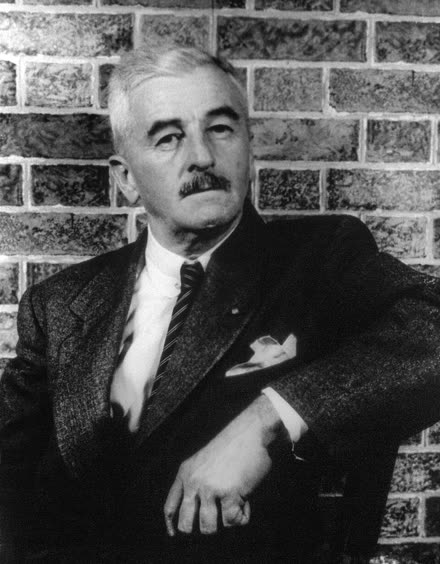
“I believe that man will not merely endure:he will prevail.”

William Faulkner, 1954

William Faulkner, Nobel banquet speech, 1950

Portrait, 1954: Carl Van Vechten, Library of Congress

Next: Part 2

That’s how to run resilient clinical trials for resilient human beings. Part 2 covers the future of clinical trials and the hopeful future of where they will go in the next decade.

1

Building resilient clinical trials

You just read

1
2

The future of clinical trials

Read Part 2

2